
Electronic Health Records (EHR)
The EHR is the central hub of every Eyeli consultation - where everything starts and ends.
What the EHR does
Eyeli creates a dedicated Electronic Health Record for each patient consultation. It brings together all inputs and outputs into one structured, consistent record:
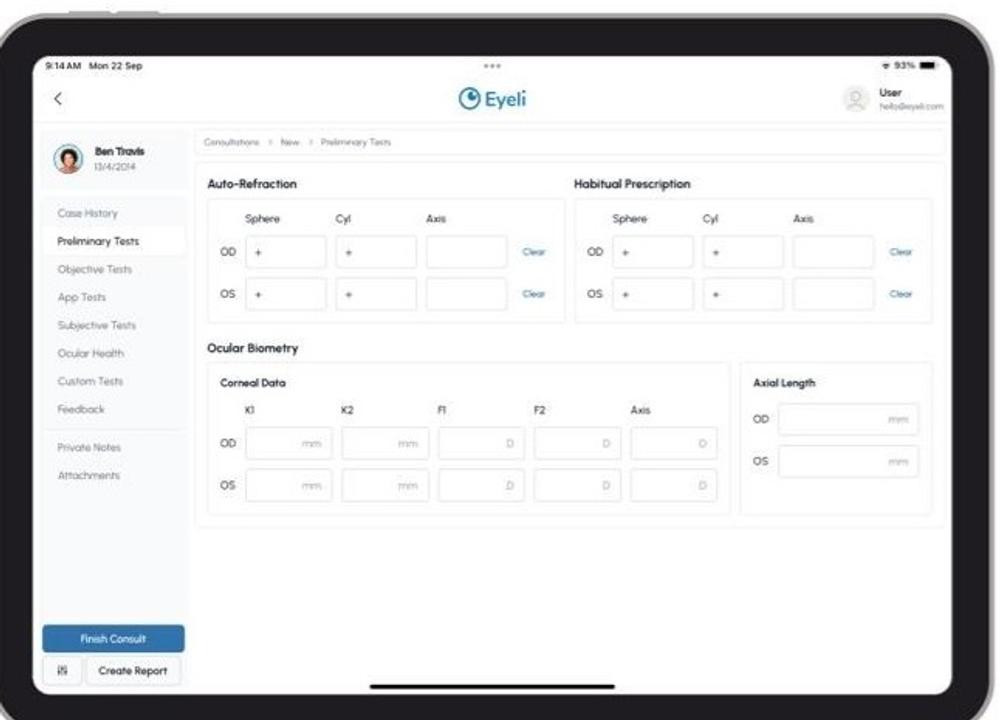
| Data type | Source |
|---|---|
| Practitioner-entered data | Manually recorded test results and clinical observations |
| Digital test results | Automatically captured from Eyeli's near and distance tests |
| Derived calculations | Values like estimated axial length and AC/A ratio, computed from multiple inputs |
All digital test results flow into the EHR automatically. You don't need to manually enter results from Eyeli's digital tests - they are captured and stored as soon as the test is completed.
Why it matters
Without a centralised record, test results are scattered, transcription errors creep in, and consultations slow down. The EHR eliminates that friction - every result is in one place, accurate, and immediately accessible.
Who uses it and how
| Role | Use |
|---|---|
| Practitioners | Run tests, record observations, and access all results during the consultation |
| Administrative staff | Create and maintain patient profiles from a desktop or laptop |
The EHR is accessible from any supported device - tablet, smartphone, desktop, or laptop. Practitioners typically use a tablet during live consultations; admin staff manage profiles from a desktop.